
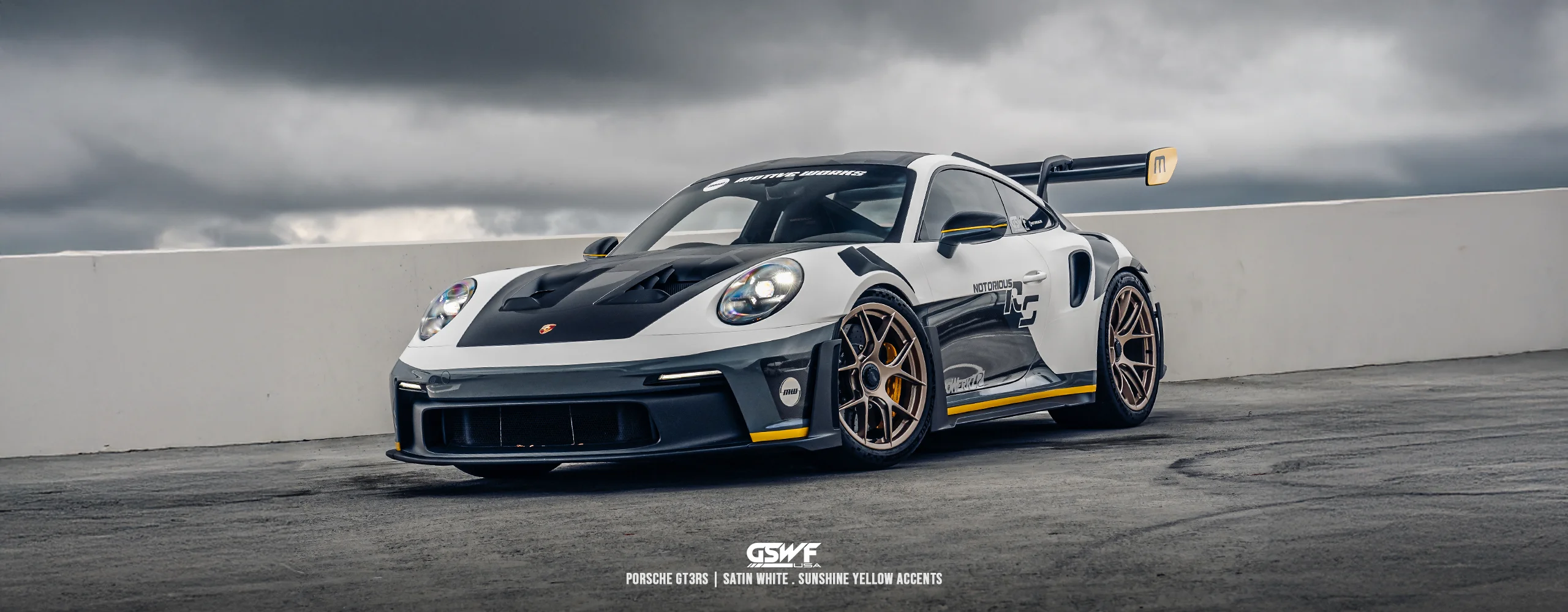
Ceramic Coating for Cars in India: The Complete Guide (2026)
Walk into any detailing studio in India and you’ll hear the same pitch: ceramic coating for car paint will make it glossier, easier to wash, and protected for years. Most of that is true. Some of it is badly oversold.
This is the honest version. A ceramic coating is a liquid, glass-like layer that chemically bonds to your paint, and in Indian conditions — 45°C summers, monsoon acid rain, hard water, dust that never quite goes away — it genuinely earns its money. But it is not scratch-proof, it is not permanent, and if you buy it for the wrong reasons you will feel cheated within six months.
Below is everything you actually need: how it works, what it costs in ₹ for a Swift versus a Fortuner, why the ₹499 bottle on Amazon is not the same thing as a ₹25,000 studio job, how long it really lasts, and how to tell a good studio from a bad one. We install paint protection film for a living, so we’ll also tell you plainly when film is the smarter spend instead.
What is ceramic coating for cars? A plain-English explanation
A ceramic coating for cars is a liquid polymer — mostly silicon dioxide (SiO₂), the same basic compound as glass and sand — that is applied to clean car paint. As it cures, it forms a hard, transparent layer roughly 2 to 5 microns thick (a human hair is about 70 microns, for scale) that is chemically bonded to the clear coat rather than just sitting on top of it.
That last part is the whole point. Wax and polish sit on your paint and wash off in a few weeks. A coating bonds to it and stays for years.
Three words get thrown around constantly, so here they are in plain English:
- SiO₂ / silica — the glass-like ingredient that does the actual protecting.
- Hydrophobic — literally “water-hating”. Water beads up and rolls off instead of spreading and drying into spots.
- Nano / semi-permanent — it’s an extremely thin layer that won’t wash off, but it will slowly wear down and eventually needs redoing.
Think of it as a sacrificial shield made of glass. Bird droppings, tree sap, hard-water spots and UV attack the coating first, not the ₹80,000 factory paint job underneath.
How ceramic coating for cars actually works
When the product is wiped onto properly prepared paint, four things happen over the next 24–48 hours as it cures.
1. It fills the pores. Car paint looks smooth but is microscopically rough and slightly porous. The liquid settles into those valleys and levels the surface out.
2. It cross-links. As the solvent evaporates, the silica molecules link into a rigid lattice and form covalent bonds with the clear coat. This is a chemical reaction, not glue — which is why you cannot simply wash it off later.
3. It lowers the surface energy. A cured coating typically pushes the water contact angle above 105–110°. In plain terms: water can’t grip the surface, so it balls up and runs off, taking loose dust with it. That’s the “self-cleaning” effect people talk about.
4. It hardens. Full cure takes 5–7 days. During that window the car should stay dry and out of the rain — which matters a lot if you’re booking a slot in July in Mumbai or Kochi.
The visible result is depth and gloss. Because the surface is now optically flatter, light reflects more evenly, and dark colours in particular — Fortuner in Attitude Black, Creta in Abyss Black — look noticeably wetter.
Why Indian conditions change the maths
Most coating information online is written for American or European cars, where the enemy is road salt and winter grit. India is a completely different fight, and it changes what you should actually care about.
| Indian condition | What it does to paint | How a coating helps |
|---|---|---|
| 45°C+ summer sun, high UV index | Clear coat oxidises and fades; reds and blacks go dull in 3–4 years | Blocks a meaningful share of UV before it reaches the clear coat |
| Monsoon rain (often mildly acidic in metros) | Etching marks and water spots that bond into the clear coat | Water sheets off fast; contaminants sit on the coating, not the paint |
| Hard borewell water at most washes | Calcium and magnesium dry into stubborn white spots | Far less dwell time for minerals to bond — but you still must dry the car |
| Fine construction and road dust | Dry-wiping drags grit and creates swirl marks | Dust releases more easily, so washing is gentler by default |
| Bird droppings and tree sap | Highly acidic; can etch bare clear coat in hours in hot weather | Buys you time — hours to days instead of minutes |
The honest headline: in Indian conditions a coating’s single biggest real-world benefit isn’t gloss. It’s that your car gets damaged less during washing, because dirt lets go more easily and nobody has to scrub. Most paint damage on Indian cars comes from the wash, not the road.
The ₹499 bottle vs the ₹25,000 job: what you’re actually paying for
Search for a coating online and you’ll be buried in 30ml bottles at ₹399, ₹799 and ₹1,328, all promising “9H Nano” and “10H Graphene” protection. Then a studio quotes you ₹25,000. Both are called ceramic coating. They are not remotely the same product, and this is the single most confusing thing about the category in India.
Here’s what actually separates them.
| DIY kit (₹400–₹4,500) | Professional studio job (₹12,000–₹45,000) | |
|---|---|---|
| Active solids | Typically 20–40% — much of the bottle is solvent and carrier | Typically 70–90% SiO₂ solids in professional-grade products |
| Layer thickness | Under 1 micron, often patchy | 2–5 microns, evenly levelled |
| Paint correction | None — you’re sealing existing swirls in | 8–20 hours of decontamination and machine polishing |
| Curing environment | Your driveway, at whatever humidity the day gives you | Dust-controlled bay, often with IR lamps |
| Realistic lifespan | 3–8 months | 2–5 years |
| Warranty | None that means anything | Written, with annual inspection conditions |
Roughly 60–70% of what a studio charges is labour, not liquid. The bottle a studio uses might cost them ₹4,000–₹9,000. The rest is two or three days of skilled work — and that work is the part that determines whether the coating lasts three months or three years.
This is why coating over uncorrected paint is such a waste. The coating is transparent and it locks in whatever is underneath. Apply it over swirl marks and you have just sealed those swirl marks under a hard layer for the next three years.
The rule of thumb: if a studio quotes you a full coating job and doesn’t mention paint correction, they are selling you a bottle, not a service. Walk away.
DIY kits aren’t useless — a ₹800 spray sealant on a two-year-old daily-driven Swift will genuinely make it easier to wash for a few months. Just buy it knowing it’s a seasonal top-up, not protection.
Types of ceramic coating for cars sold in India
Studios use a lot of different names, but almost every ceramic coating for cars on the Indian market falls into one of four families.
1. Standard SiO₂ coatings
The mainstream option. Silica-based, 2–3 microns, typically 2–3 years of real life. This is what most ₹12,000–₹25,000 packages use, and for the majority of Indian car owners it is the sensible choice.
2. Multi-layer SiO₂ systems
The same chemistry applied in two or three bonded layers, sometimes with a sacrificial top coat. Adds thickness, gloss depth and typically 3–5 years of life. Expect ₹25,000–₹45,000 depending on car size.
3. Graphene-infused coatings
Graphene sheets added to a silica base. The genuine advantages are better heat dissipation (which reduces water spotting on hot panels — relevant in Indian summers) and slightly more flexible, less brittle behaviour. The marketing claims of “10x harder” are nonsense. Expect a 15–25% premium over an equivalent SiO₂ product for a real, but modest, gain.
4. SiC (silicon carbide) hybrids
Silicon carbide is genuinely harder than silica and these coatings do resist chemical etching better. They’re the priciest option and mostly justified on luxury cars. Note that many products advertised as SiC contain only a small percentage of it.
What about “teflon coating”?
If a studio offers you “teflon coating” for ₹3,000–₹6,000, understand what you’re buying: it’s a PTFE-based sealant that lasts 6–12 months. It’s a decent, cheap gloss treatment. It is not in the same category as a real coating, and it shouldn’t be priced or sold as one.
What “9H” really means (and why 10H is marketing)
Every product in India is sold as “9H”. Here’s the thing almost nobody explains: 9H is the top of the pencil hardness scale. It’s an old coatings test where pencils of increasing hardness are dragged across a cured film to see which one scratches it.
The scale runs 6B (softest) to 9H (hardest). It stops at 9H. So:
- 9H is not impressive — it’s the minimum any competent coating achieves. It’s table stakes, not a differentiator.
- “10H” does not exist on the pencil scale. It is a marketing number, full stop. You’ll see plenty of ₹799 bottles claiming it.
- Pencil hardness doesn’t predict swirl resistance anyway. A 9H coating still swirls if you wash it with a dirty sponge.
What actually matters when you compare products: SiO₂ solids percentage, warranty length and terms, cured thickness in microns, and the studio’s own portfolio. Ask about those four things and ignore the hardness number entirely.
Ceramic coating for car prices in India (2026)
Real professional pricing for ceramic coating for cars, based on current studio rates across Indian metros. These are for a proper job including decontamination and single-stage paint correction.
| Car segment | Examples | Standard SiO₂ (2–3 yrs) | Multi-layer / graphene (3–5 yrs) |
|---|---|---|---|
| Hatchback | Swift, i20, Baleno, Altroz | ₹12,000 – ₹20,000 | ₹20,000 – ₹30,000 |
| Sedan | City, Verna, Virtus, Slavia | ₹15,000 – ₹24,000 | ₹24,000 – ₹35,000 |
| Compact SUV | Creta, Seltos, Brezza, Nexon | ₹18,000 – ₹28,000 | ₹28,000 – ₹40,000 |
| Full-size SUV | Fortuner, XUV700, Safari, Thar | ₹22,000 – ₹34,000 | ₹34,000 – ₹50,000 |
| Luxury | BMW, Mercedes, Audi, Volvo | ₹35,000 – ₹55,000 | ₹55,000 – ₹90,000+ |
What pushes a quote up:
- Paint condition. A three-year-old car needing two-stage correction can add ₹6,000–₹15,000. A brand-new car off the showroom floor is cheapest to coat.
- Colour. Blacks and dark blues show every defect, so correction takes longer and costs more.
- Extras. Glass coating (₹2,000–₹5,000), alloy wheel coating (₹3,000–₹7,000), interior fabric and leather (₹4,000–₹9,000).
- City. Mumbai, Delhi NCR and Bengaluru run roughly 15–25% above Tier-2 cities like Coimbatore, Indore or Nagpur.
Be suspicious of: any full-body quote under ₹8,000 for a car. At that price nobody is spending two days on your paint. You are getting a wipe-on sealant with a coating label.
What a proper studio job actually involves
A real job is 2–3 days. If someone offers same-day delivery, that is your answer about what they’re actually doing.
- Wash and chemical decontamination (2–3 hrs). Two-bucket wash, then iron remover to dissolve embedded brake dust — it famously bleeds purple — and tar remover on the lower panels.
- Clay bar (1–2 hrs). Physically pulls out bonded contaminants the chemicals left behind. Run your hand over the paint through a plastic bag before and after; the difference is obvious.
- Paint correction (6–16 hrs). Machine polishing to remove swirls and light scratches. This is the longest, most skilled and most important stage. Ask to see paint depth gauge readings if you own a luxury car — over-polishing thins the clear coat permanently.
- Panel wipe (1 hr). An IPA or dedicated solvent wipe to strip every trace of polishing oil. Skip this and the coating bonds to oil residue and fails in weeks.
- Application (2–4 hrs). Applied panel by panel in a controlled bay, then levelled at exactly the right moment. Level too early and it smears; too late and you get high spots that need re-polishing.
- Curing (12–24 hrs in-studio, 5–7 days full). No rain, no washing for the first week.
Before you hand over your keys, ask for photos of stages 1 to 4 on your car. Every honest studio takes them. It’s the simplest quality filter there is.
Thinking about protection for a new car? If you’re weighing coating against film — or wondering whether to do both — talk to a certified GSWF studio near you. We’ll tell you honestly which one your car and driving actually justify.
The honest bit: what ceramic coating for cars will not do
This is the section most studio websites leave out, and it’s the reason customers end up disappointed.
- It will not stop stone chips. A coating is 2–5 microns of hard, brittle glass. A stone off a truck on NH-48 goes straight through it into your paint. Only a physical film absorbs that impact — this is the single most important limitation to understand.
- It will not stop scratches from keys, bushes or careless washing. It resists light marring. It does not resist anything with real force behind it.
- It will not fix bad paint. It’s transparent. Whatever is under it stays visible, permanently sealed in.
- It will not make your car self-cleaning. It makes washing easier and less frequent. Your car still gets dirty, and it still needs washing every 10–15 days in an Indian city.
- It will not last “forever”. Anyone selling a lifetime coating is selling you a lifetime of nothing. Coatings wear down.
- It will not prevent water spots on its own. If you let hard water dry on a hot bonnet, you will get spots. The coating buys you time; it doesn’t replace drying the car.
Coating vs paint protection film vs wax: a straight comparison
Wax, ceramic coating for cars and paint protection film get lumped together constantly, and they solve genuinely different problems.
| Wax / sealant | Ceramic coating | Paint protection film | |
|---|---|---|---|
| What it is | Carnauba or polymer layer | 2–5 micron bonded glass layer | 150–200 micron TPU film |
| Stone chip protection | None | None | Excellent |
| Scratch protection | Negligible | Light marring only | Absorbs and self-heals |
| Chemical and UV protection | Weak | Excellent | Excellent |
| Gloss boost | Warm glow, short-lived | Sharp, deep, lasting | Gloss or matte, subtle |
| Lifespan | 1–3 months | 2–5 years | 5–10 years |
| Cost (mid-size car) | ₹1,500 – ₹4,000 | ₹15,000 – ₹35,000 | ₹90,000 – ₹2,50,000 |
Choose by the problem you actually have:
- Your car looks dull and washing is a chore → coating.
- Your bonnet and bumper are getting chipped on highways → film, at minimum on the front end.
- You just want it shiny for a wedding next month → wax. Don’t overspend.
If you’re actively torn between the two bigger options, we’ve written a full head-to-head on which protection makes more sense on Indian roads, with a decision framework by car type and driving pattern.
Can you combine ceramic coating for cars with film?
Yes — and on cars worth protecting properly, pairing ceramic coating for cars with film is the setup we recommend most often. They protect against different things, so they stack rather than overlap.
The standard approach:
- Film on the impact zones — bonnet, front bumper, front fenders, mirrors, headlights, door edges and the rear bumper loading lip. This handles stone chips and abrasion.
- Coating over everything else — roof, doors, boot, quarter panels. This handles UV, chemicals and washing ease.
- Coating on top of the film too. Modern films take a coating well, and it makes the film itself easier to clean and helps resist the yellowing that cheap film suffers from.
A typical front-end film plus full-body coating package on a Creta or Seltos runs roughly ₹55,000–₹85,000 — considerably less than full-body film, and covering most of the real-world risk.
One ordering rule that matters: film goes on first, coating second. Coating a panel and then applying film over it means the film’s adhesive is bonding to a deliberately slippery, low-energy surface. It will lift at the edges. Any installer who gets this wrong is telling you something about their experience. If you’re planning a combined job, it’s worth knowing which zones take the most damage on Indian roads before you decide how much film to buy.
How long does ceramic coating for cars really last?
Marketed lifespans and real lifespans are different numbers. Here’s what a ceramic coating for cars actually delivers on Indian roads, based on what we see come through the studio.
| Product tier | Marketed | Realistic in India | Main thing that kills it |
|---|---|---|---|
| DIY spray kit | 1–2 years | 3–8 months | No prep, thin and uneven application |
| Entry professional | 2 years | 18–24 months | Automatic tunnel washes |
| Standard SiO₂ | 3 years | 2–3 years | Harsh alkaline shampoos at local washes |
| Multi-layer / graphene | 5 years | 3–4 years | Permanent outdoor parking in direct sun |
| Premium SiC system | 7–10 years | 4–6 years with annual servicing | Skipping the yearly top-up |
The four things that shorten it most, in order:
- Automatic tunnel washes. Those spinning brushes are the fastest way to destroy a coating. A single bad tunnel wash can undo months of hydrophobic performance.
- Wrong shampoo. Strongly alkaline degreasers strip the coating. It must be pH-neutral.
- Outdoor parking. A car parked in the open in Chennai or Ahmedabad will lose roughly a year of coating life versus a basement-parked twin.
- Skipping the annual top-up. Most warranties require it. Miss it and you often void the warranty as well as lose performance.
A useful mental test: pour water on the bonnet. If it beads into tight domes and runs off, the coating is healthy. If it spreads into flat sheets, hydrophobic performance is gone — the chemical protection usually lingers a while longer, but it’s time to book a decontamination and top-up.
Looking after a coated car
A ceramic coating for cars changes how you should wash it, and getting this wrong is the number one reason people say “my coating stopped working after a year”.
Do:
- Use the two-bucket method — one for soapy water, one to rinse the mitt. It costs ₹500 and prevents most swirl marks.
- Use a pH-neutral shampoo (pH 6–8). Read the label; most cheap Indian car shampoos are alkaline.
- Dry with a plush microfibre towel or a blower. Never let hard water air-dry.
- Wash every 10–15 days. Coatings resist bonding, but dust left sitting for a month still bonds.
- Use a SiO₂ top-up spray every 2–3 months. Ten minutes, roughly ₹800 a bottle, and it measurably extends coating life.
Don’t:
- Use automatic tunnel washes. Ever.
- Dry-wipe dust off with a cloth. That’s grinding grit into your paint.
- Use wax or polish on top — polish is abrasive and will thin the coating you just paid for.
- Let bird droppings sit. The coating buys you hours, not days, at 40°C.
- Park under trees during sap season if you can avoid it.
Is ceramic coating for cars worth the money?
Honest answer: whether ceramic coating for cars is worth it depends entirely on your car, your parking and your patience. Here’s how we actually advise people.
| Your situation | Our honest verdict |
|---|---|
| New car, dark colour, plan to keep 5+ years | Yes. Best possible time — no correction needed, so you get maximum life for minimum cost. |
| New car, mostly highway driving | Film first on the front end, coating second. Chips are your real risk. |
| 2–4 year old car, paint still decent | Yes, but budget for correction. It’ll look dramatically better afterwards. |
| Older car with faded or repainted panels | Probably not. Spend on paint correction alone and reassess. |
| Car parked outdoors 24/7 | Yes — this is where UV protection pays back hardest. |
| You use automatic tunnel washes and won’t stop | No. You’ll destroy it inside a year. Save the money. |
| Planning to sell within a year | No. A ₹4,000 detail and polish gets you nearly the same showroom effect. |
The value maths: a ₹20,000 coating over three years is about ₹550 a month. Against that, set what you’d otherwise spend on waxing (₹2,500 every couple of months), the reduced risk of a ₹15,000 panel respray from etching, and a modestly better resale photo. For a car you’re keeping, it usually works out. For a car you’re flipping, it doesn’t.
Nine questions to ask before you book a studio
Print these. The answers will tell you more than any Instagram reel.
- Which exact product and which variant? A brand name alone isn’t an answer — most brands sell a 2-year and a 5-year product.
- What SiO₂ solids percentage? A studio that doesn’t know is a studio that doesn’t read the technical sheet.
- How many hours of paint correction are in this quote? If the answer is vague or “we’ll see”, the quote is not real.
- Single-stage or two-stage correction? Understand which one you’re paying for.
- How long will you keep my car? Under 24 hours means corners are being cut.
- Do you have a dust-controlled indoor bay? Coating applied in an open shed picks up airborne dust permanently.
- What exactly does the warranty cover, and what voids it? Get it in writing, and read the annual-inspection clause.
- Will you send me stage-wise photos of my car? Every good studio says yes immediately.
- Can I see a car you coated more than a year ago? The best question on this list. Fresh work always looks good.
Frequently asked questions
Is ceramic coating for cars scratch-proof?
No. It resists light swirl marks from washing, but it will not stop stone chips, key scratches or anything with force behind it. It’s roughly 2–5 microns thick. Only a 150–200 micron paint protection film absorbs real impact.
How much does ceramic coating for cars cost in India?
A professional job runs ₹12,000–₹20,000 for a hatchback, ₹15,000–₹24,000 for a sedan, ₹18,000–₹28,000 for a compact SUV and ₹22,000–₹34,000 for a full-size SUV. Multi-layer and graphene packages cost 40–60% more. Luxury cars start around ₹35,000.
What are the disadvantages of ceramic coating for cars?
Four real ones: it doesn’t stop stone chips or meaningful scratches; it permanently seals in any existing paint defects, so prep is everything; it needs specific pH-neutral washing to survive; and a poor application can leave high spots that require machine polishing to remove.
How long does a coating last in Indian conditions?
Realistically 2–3 years for a standard professional SiO₂ coating, 3–4 years for multi-layer or graphene, and 4–6 years for premium SiC systems with annual servicing. DIY kits last 3–8 months. Outdoor parking and automatic tunnel washes shorten all of these significantly.
Can I apply a coating myself at home?
You can apply a DIY kit, and it’ll make the car easier to wash for a few months. But you can’t replicate the two critical steps: multi-stage machine paint correction and a dust-controlled curing environment. Without those, you’re sealing swirl marks under a thin, uneven layer. Treat DIY kits as seasonal top-ups, not protection.
Can a coating be applied over paint protection film?
Yes, and it’s a good idea. It makes the film easier to clean and helps resist yellowing. The order matters though — film first, coating second. Applying film over a coated panel causes edge lifting because the adhesive can’t grip the low-energy surface.
Is 10H better than 9H?
No, because 10H doesn’t exist. The pencil hardness scale ends at 9H, so any product advertising 10H is using a marketing number. Compare SiO₂ solids percentage, warranty terms and cured thickness instead.
Does a coated car still need washing?
Yes — every 10–15 days in an Indian city. The coating makes washing faster, gentler and less frequent, but dust left sitting for weeks still bonds to the surface. “Self-cleaning” is marketing shorthand for “rinses off more easily”.
Will a coating stop my paint fading in Indian summers?
It slows fading substantially by absorbing UV before it reaches the clear coat, which matters a lot for reds, blacks and dark blues parked outdoors. It won’t stop fading forever — but a coated car parked in the sun will hold its colour noticeably better than an uncoated one over three to four years.
Is ceramic coating for cars better than paint protection film?
They solve different problems, so neither is universally better. Coating wins on gloss, chemical resistance, ease of washing and cost. Film wins on stone chips, scratches and abrasion. If you drive highways regularly, film matters more. If your car mostly does city runs and sits in the sun, coating gives you more for your money. Many owners do both.
The bottom line
Ceramic coating for cars is a genuinely good product sold with genuinely bad marketing. Strip away the 10H claims and the “lifetime protection” language and what you have is a hard, transparent layer that makes your paint far more resistant to UV, chemicals and hard water — and makes the car meaningfully easier and safer to wash. In Indian conditions, that’s worth real money.
What it isn’t is armour. If your worry is stone chips on the highway, no coating at any price will help you, and you should be looking at film for the front end instead.
Buy it for the right reasons: you want your paint to stay UV-protected and easy to clean for the next few years, and you’re willing to wash the car properly. Buy it from a studio that talks about paint correction before it talks about hardness ratings. And don’t confuse the ₹499 bottle with the ₹25,000 job — they share a name and nothing else.
If you’d like a straight answer about what your specific car actually needs, find a certified GSWF studio near you. We’d rather talk you into the right thing than the expensive thing. It’s also worth reading our complete guide to protective film for Indian cars and what film costs across Indian car segments before you decide how to split your budget.