
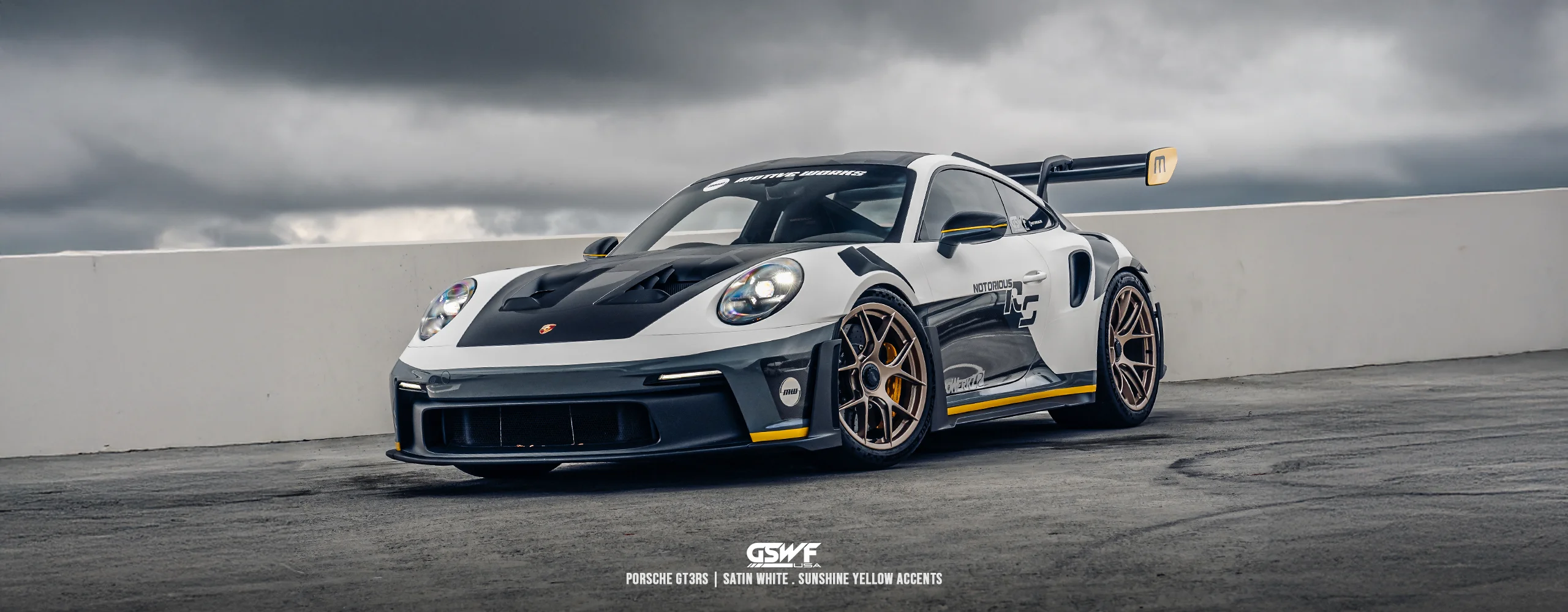
PPF Full Form in Car | Paint Protection Film Guide 2026
PPF full form in car terms is Paint Protection Film. The PPF full form in car detailing describes a clear, self-healing polyurethane sheet applied over your car’s paint — it takes the stone chips, scratches, bird droppings and UV damage that would otherwise hit the factory finish. Standard automotive film runs 150–200 microns thick, roughly twice the thickness of your car’s original clear coat.
If you searched for the PPF full form and landed on bank pages about savings schemes, you are not alone. In finance, PPF means Public Provident Fund. In the car world it means something completely different — and that is what this guide covers.
Quick answer: The PPF full form in car terms is Paint Protection Film. It is a transparent TPU layer bonded to your car’s painted panels that resists chips and scratches, heals light swirl marks with heat, and lasts 5–10 years. Full-body cover in India costs roughly ₹85,000 to ₹2,60,000 depending on the car.
Luxury and everyday car owners alike use this film to preserve factory paint and protect resale value. On Indian roads — gravel, construction dust, monsoon grime, 45°C summers — it has become one of the most common paint protection choices.
This guide explains everything you need to know: how the film works, what it is made of, the finishes available, real pricing, durability, warranty and insurance questions, what it genuinely cannot do, and whether it is worth the money for your car.
PPF Full Form in Car: What It Actually Stands For
Many car owners want to understand the term before they spend a lakh on it. The PPF full form in car and detailing contexts is always the same three words:
Paint Protection Film
It is made using TPU (Thermoplastic Polyurethane), a flexible, durable polymer designed to absorb minor impacts and protect painted surfaces. TPU is the same family of material used in phone cases and running-shoe soles — it stretches without tearing and springs back to shape.
In practice, that means a fitter can heat the film and stretch it around a Thar’s boxy fender edge or a Creta’s curved bumper without creasing it. To understand the material science better, explore how the film is manufactured using TPU technology.
PPF Full Form in Car vs PPF in Banking
Search “PPF full form” in India and Google shows you Public Provident Fund — the government savings scheme. That is the finance meaning. The automotive meaning is unrelated. Here is the difference in one view:
| What you mean | PPF stands for | What it actually is |
|---|---|---|
| Cars, bikes, detailing | Paint Protection Film | A 150–200 micron clear TPU film applied over paint to stop chips and scratches |
| Banking, tax saving, investment | Public Provident Fund | A 15-year government savings scheme under Section 80C |
| Economics textbooks | Production Possibility Frontier | A graph showing trade-offs between producing two goods |
Same three letters, three unrelated worlds. If someone at a detailing studio quotes you for PPF, the full form they mean is Paint Protection Film — never the savings scheme. Everything below is about the car one.
How Automotive Protection Film Works
This protective layer acts as a physical barrier over your vehicle’s paint. Anything that would have struck the paint strikes the film instead, and the TPU absorbs and spreads the impact energy before it reaches the clear coat underneath.
It helps protect against:
- Stone chips
- Minor scratches
- Swirl marks
- UV exposure and fading
- Bird droppings and tree sap
- Environmental contaminants and hard-water spotting
Premium TPU films also self-heal light scratches when exposed to heat. Park in the sun, or pour warm water over the panel, and the top coat relaxes back flat within a few minutes. To understand this feature better, explore how the heat-recovery process works.
PPF Full Form in Car Explained: What the Film Is Made Of
Automotive protection film is not one material. It is a stack of four layers, each doing a specific job. Understanding the stack is the easiest way to tell a good film from a cheap one.
| Layer | Typical thickness | What it does |
|---|---|---|
| Top coat (elastomeric polymer) | 15–20 microns | Repels water and grime; this is the layer that self-heals with heat |
| TPU core | 140–160 microns | The actual armour — absorbs stone-chip impact and stretches around curves |
| Acrylic adhesive | 35–40 microns | Bonds to paint but releases cleanly on removal |
| Release liner | — | Peeled off during installation; not part of the finished film |
Cheaper films skip the elastomeric top coat and use PVC instead of TPU. They cost less, but they yellow within 18–24 months in Indian sun and go brittle. If a studio quotes ₹30,000 for a full body on a sedan, that is almost certainly PVC.
The self-healing effect is real but limited: it works on surface swirls and light scratches that sit in the top coat. Deep scratches that cut through to the TPU core do not heal.
Why Luxury Car Owners Choose Paint Protection Film
Luxury vehicles use multi-stage paint finishes that are expensive to repair or repaint. A single respray on a German saloon can run past ₹60,000 per panel at an authorised body shop, and a resprayed panel almost never matches factory paint exactly under sunlight.
This is why owners of Mercedes-Benz, BMW, Audi, Porsche and Range Rover vehicles commonly choose protective TPU film. The benefits include:
- Preserving original factory paint
- Reducing repainting costs
- Maintaining resale value — an unrepainted car commands a clear premium
- Protecting against road damage on highways
For premium vehicle pricing, explore the luxury car protection pricing guide.
Types of Protective Film: Clear, Matte and Colour
Modern vehicle protection films come in three main finishes. The protection is broadly the same across all of them; what changes is the look.
Clear film maintains the original gloss finish of the vehicle. Applied well, it is genuinely invisible from a metre away. Best for factory finish protection, daily-use vehicles and long-term ownership.
Matte or stealth film creates a satin appearance, converting a gloss car to a matte one while protecting it. Best for understated premium styling and a genuinely distinctive look. To understand stealth finishes better, explore the matte and satin finish guide.
Colour film combines protection with a full colour change — and unlike a respray, it is completely reversible. Colour changes must be declared to your RTO in India, so explore the rules on coloured films in India before committing.
Coverage Options and the Panels That Matter Most
Coverage selection depends on your budget and driving conditions.
| Full body protection | Partial protection | |
|---|---|---|
| What it covers | The entire vehicle | High-impact panels only |
| Relative cost | Full price | Roughly a third |
| Best for | Luxury cars, long ownership, highway use | City driving, tighter budgets |
If you are protecting selectively, these are the panels that earn their keep — they take roughly 80% of all highway stone-chip damage:
- Front bumper
- Bonnet
- Side mirrors
- Door edges and handle cups
- Wheel arches and rocker panels
To go deeper, explore the full body versus partial coverage comparison and the guide to which panels to protect first.
Paint Protection Film vs Ceramic Coating
Many buyers compare TPU film with ceramic coating. They are not competitors — they solve different problems.
| Protection film | Ceramic coating | |
|---|---|---|
| Thickness | 150–200 microns | 2–5 microns |
| Stops stone chips | Yes | No |
| Adds gloss | Slightly | Significantly |
| Makes washing easier | Yes | Yes |
The simplest way to think about it: film is armour, coating is polish. Many owners use both — film on the impact zones, coating over the rest of the car.
PPF Full Form in Car and What It Costs in India
Prices vary by city, studio and film brand, but these are the realistic 2026 ranges for genuine TPU film with a written warranty:
| Car type | Front-end only | Full body | Examples |
|---|---|---|---|
| Hatchback | ₹25,000 – ₹40,000 | ₹85,000 – ₹1,50,000 | Swift, i20, Altroz |
| Sedan | ₹30,000 – ₹48,000 | ₹1,10,000 – ₹2,00,000 | City, Verna, Virtus |
| SUV | ₹35,000 – ₹55,000 | ₹1,40,000 – ₹2,60,000 | Creta, XUV700, Fortuner, Thar |
| Luxury / imported | ₹55,000 – ₹90,000 | ₹2,50,000 – ₹6,00,000+ | BMW, Mercedes, Porsche, Range Rover |
Three things move the number: the film brand and its warranty length, how much of the car you cover, and how much labour the panels demand. A Fortuner costs more than a Verna simply because there is more square footage of film and more complex edges to wrap.
Front-end coverage — bonnet, front bumper, fenders, wing mirrors and headlights — protects most of the surfaces that actually get hit on a highway. For many owners it is the sensible starting point. Our complete India pricing breakdown goes deeper by car type and coverage level.
Want a real number for your car and city? Find a certified GSWF studio near you and ask for a written quote — genuine studios will give you the film brand, micron rating and warranty in writing.
Vehicle Protection Film Pricing at GSWF
For GSWF films specifically, packages start at:
- Clear film packages — from ₹1,00,000 onwards
- Stealth film packages — from ₹1,45,000 onwards
- Color film packages — from ₹1,75,000 onwards
Final pricing depends on vehicle size, film type and finish, coverage level, and installation complexity.
PPF Full Form in Car: How Long Does the Film Last?
Durability depends on film quality and grade, installation quality, your maintenance and wash routine, and your driving and parking conditions.
Premium TPU films carry 5–10 year warranties and genuinely reach that range when maintained properly. In Indian conditions, most cars see 5–8 years of good performance before the top coat starts to dull. Covered parking easily adds two to three years; a car that lives under open sky in Chennai or Jaipur ages faster than one in a basement in Bengaluru.
To understand durability better, explore the guide to realistic lifespan in Indian conditions, and why some films discolour long before their warranty expires.
PPF Full Form in Bike vs Car: Is It the Same Film?
Yes — the PPF full form on a bike is exactly what it is on a car: Paint Protection Film. On a two-wheeler it goes on the tank, side panels, front fender, headlight cowl and mudguard. Riders increasingly use it on tanks, where constant knee and jacket contact wears a dull patch into the paint within a year or two.
Bike coverage is far cheaper because the surface area is small: expect ₹8,000 – ₹25,000 for a typical premium motorcycle tank-and-panel kit, against ₹1,00,000+ for a car. The film specification is the same — 150–200 micron TPU with a self-healing top coat.
One difference worth knowing: fuel spills. A good TPU film shrugs off petrol contact if wiped promptly, but cheap PVC film will stain and lift around the tank cap.
PPF Full Form in Car: Warranty and Insurance Questions
Two questions come up constantly once owners understand what the PPF full form in car terms actually means — and both have straightforward answers.
Does the film void your manufacturer warranty? No. Film is a reversible, non-invasive addition. It does not drill, cut, rewire or alter any vehicle system, so professionally installed film does not void a manufacturer warranty. Policies can vary between brands and dealerships, and a few dealers push back informally, but there is no mechanical basis for a claim rejection. The exceptions are edge cases — film applied over a panel that was already repainted, or removal done with excessive heat by an untrained fitter. Explore the full warranty explainer for the detail.
Does motor insurance cover it? Standard comprehensive policies in India generally do not cover the film itself, because it is treated as an aftermarket accessory rather than part of the vehicle. If you want it covered, it usually has to be declared and added to the policy as a declared accessory, which raises the premium slightly. Coverage in practice depends on your provider, your policy terms and the cause of damage — the guide to insurance and protective films covers claims in detail.
Is Paint Protection Worth It for Used Cars?
Protective film is not limited to new vehicles. The one condition that matters is paint health — the film seals in whatever is underneath it, so any swirls, scratches or oxidation must be corrected first.
Many owners apply it on pre-owned luxury cars, restored vehicles, and high-value used cars being prepared for resale. Budget an extra ₹8,000–₹20,000 for paint correction before application on a used car.
To understand when it makes sense, explore the guide to protecting a pre-owned luxury car.
Headlight and Taillight Protection
Modern TPU film also protects headlights and taillights — and this is one of the highest-value, lowest-cost applications available.
Modern LED and projector headlamp units use polycarbonate lenses that haze and yellow under UV. A replacement unit on a premium SUV can cost ₹40,000–₹1,20,000, while filming both headlamps typically costs ₹4,000–₹8,000. It prevents UV yellowing, reduces wash scratches, and stops highway stone strikes.
To learn more, explore the headlight and taillight protection guide.
Common Mistakes Buyers Make
Avoid these mistakes when selecting vehicle protection film:
- Choosing low-quality PVC material sold as TPU
- Ignoring installer expertise and training
- Selecting based only on price
- Not understanding coverage options before signing
- Skipping warranty verification and written documentation
The most expensive mistake is the cheapest quote. A ₹35,000 “full body” job on an SUV means PVC film that will yellow before its second monsoon and may pull lacquer on removal. Read the most common buying errors before you book.
What This Film Cannot Do
Most guides only list benefits. Here is the honest other half, because knowing the limits is how you avoid disappointment after spending a lakh.
- It will not stop a dent. A 200-micron film absorbs stone-chip energy. It does nothing against a trolley in a parking lot or a bike falling against your door.
- It will not fix paint that is already damaged. Swirls, scratches and oxidation must be corrected before application — otherwise you seal the flaws in under a clear layer for the next eight years.
- It is not permanent. Even premium film ages. Expect 5–10 years depending on grade and how the car is parked.
- It will not eliminate washing. The surface is hydrophobic, not self-cleaning. Skip washing for two months in Delhi winter and you will still have grime bonded to the top coat.
- It does not make the car scratch-proof. Self-healing works on light swirls only. A key scratch that reaches the TPU core stays.
- Cheap film ages badly. PVC film yellows visibly within 18–24 months in Indian heat, and removal often pulls lacquer with it.
None of this argues against the film. It argues for buying the right grade once, from a studio that will honour the warranty.
How to Choose the Right Installer
Choosing the right installer matters as much as choosing the right film. The same film, badly fitted, will lift at the edges within a year. Four things to check:
- Experience with your kind of car. Ask how many of your model they have wrapped, and ask to see one they finished six months ago rather than yesterday.
- A dust-free bay. A single trapped dust particle becomes a permanent visible bump. If the work happens in an open shed, walk away.
- Genuine TPU material. Ask for the film brand, the micron rating and batch documentation in writing.
- Written warranty. It should cover yellowing, cracking, lifting and delamination, with a stated number of years. A verbal assurance is worth nothing three years later.
Compare what the major brands actually offer in our brand-by-brand comparison.
Is Paint Protection Film Worth It for Your Car?
This protective layer is worth considering if:
- You own a luxury or high-value car
- You drive frequently on highways
- You want long-term paint protection
- You care about resale value
- Your car is dark, metallic or a hard-to-match colour
Run the arithmetic. A single bonnet respray on a premium car runs ₹35,000–₹60,000 and permanently marks the vehicle as repainted at resale time. Full-body film at ₹1,50,000 that prevents three such repaints over eight years, and keeps the car original, pays for itself.
It makes less sense on an ageing car you plan to sell within a year, or on a light silver or white car where chips are far less visible.
PPF Full Form in Car: Common Questions
What is the full form of PPF in a car?
The PPF full form in car terms is Paint Protection Film. It is a transparent thermoplastic polyurethane (TPU) film, typically 150–200 microns thick, applied over a vehicle’s painted panels to resist stone chips, scratches, UV fading and chemical staining.
Is PPF the same as the Public Provident Fund?
No. Public Provident Fund is a government savings scheme with a 15-year lock-in. In automotive and detailing contexts, PPF always means Paint Protection Film. The abbreviation is shared; nothing else is.
Is PPF good for cars in India?
For most owners, yes. Indian driving conditions — highway gravel, construction dust, monsoon acidity, 45°C summers and unforgiving parking — are exactly the conditions the film is designed for. The value is highest on new cars, dark or metallic paint, and vehicles you plan to resell.
Why is car PPF so expensive?
Three reasons. The raw TPU is a specialist imported polymer, not commodity plastic. Installation takes 3–5 days of skilled labour in a dust-controlled bay, with each panel cut and wrapped individually. And genuine film carries a 5–10 year manufacturer warranty that the brand has to underwrite.
How much does PPF cost for a car in India?
Front-end coverage runs ₹25,000–₹55,000 for most cars. Full-body ranges from ₹85,000 for a hatchback to ₹2,60,000 for a large SUV, and ₹2,50,000–₹6,00,000+ for luxury vehicles.
Can PPF last 10 years?
Premium films carry 10-year warranties and genuinely reach that with covered parking and regular washing. Realistically, most cars in Indian conditions see 5–8 years of good performance before the top coat starts to dull. Cheap film rarely clears three years.
Can PPF be removed without damaging the paint?
Yes, when it is genuine film removed by a trained installer using controlled heat. The acrylic adhesive is designed to release cleanly from factory paint. The risk cases are cheap PVC film left on well past its life, and repainted panels where the respray was not properly cured.
Is PPF the same as ceramic coating?
No. Ceramic coating is a liquid glass-like layer a few microns thick — it adds gloss and makes washing easier, but offers no impact protection. Paint protection film is a physical barrier hundreds of times thicker. Many owners use both: film on impact zones, coating over the rest.
PPF Full Form in Car: The Short Version
The PPF full form in car ownership means Paint Protection Film — a 150–200 micron clear TPU layer that takes the damage your paint would otherwise absorb. It resists stone chips, scratches, UV fading and chemical staining, heals light swirls with heat, and lasts 5–10 years when it is genuine film properly fitted.
It will not stop dents, will not fix damage already there, and will not replace washing. What it will do is keep your car’s factory paint original — which is exactly what matters most at resale. Whether on a new car or a well-kept used one, clear, matte or colour, the decision comes down to grade and installer. Buy well once.
Related Guides
- The complete India guide to protective car film — types, benefits and buying advice in depth
- Car PPF cost in India — full pricing breakdown by car type and coverage
- Best film brands compared — XPEL, Llumar, 3M and GSWF side by side
- How long the film lasts — realistic lifespan in Indian conditions
- Which panels to protect first — the high-impact zones that matter most
- Protective film vs vinyl wrap — what each one is actually for
Ready to protect your car? Find a certified GSWF studio near you for a written quote, or explore the GSWF Clear Series to see the film specifications for yourself.