
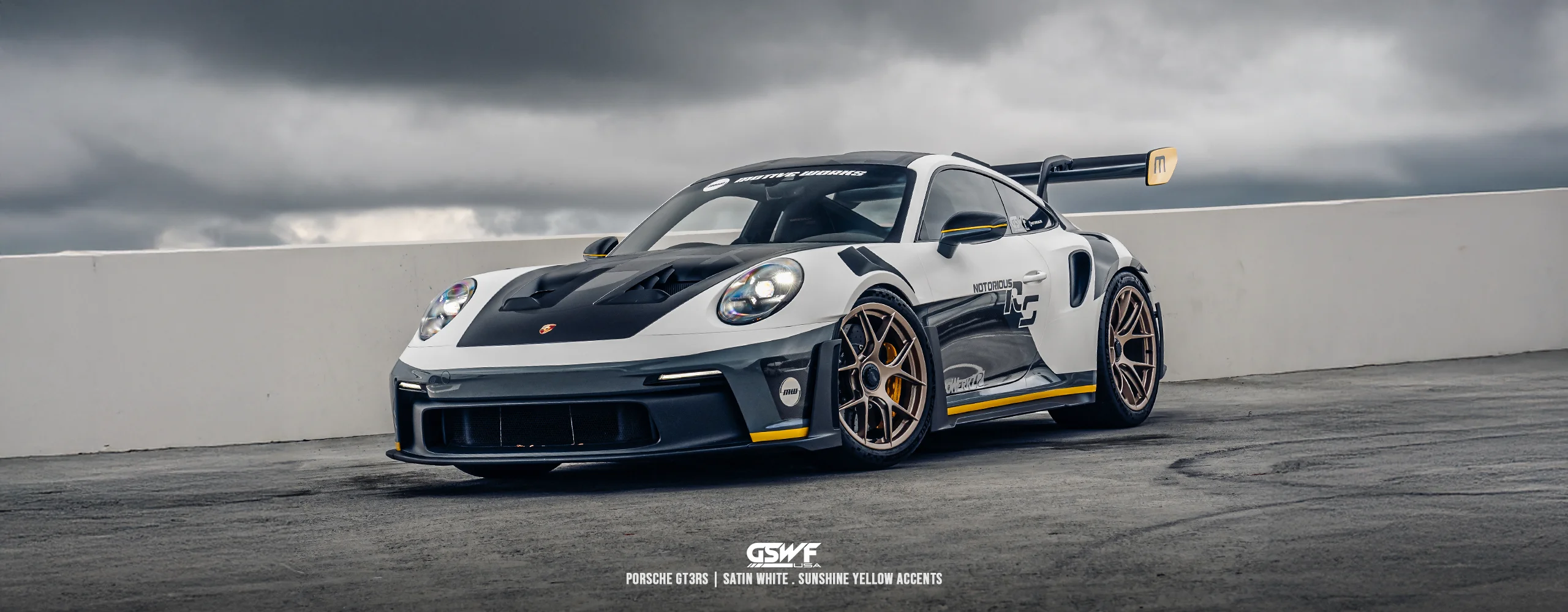
Paint Protection Film vs Vinyl Wrap: Key Differences, Costs & Which to Choose
If you have just driven a new car home — or you are staring at a bonnet full of stone chips on an older one — the studio has probably offered you two very different things for roughly similar money. The PPF vs vinyl wrap decision sounds technical, but it comes down to one plain question: do you want to protect the paint you already have, or change what your car looks like?
In fact, they are not rivals doing the same job badly. Instead, they are two different products that installers happen to fit the same way. This guide breaks down what each one contains, what it survives, what it costs in Indian rupees in 2026, and which one suits the way you actually drive.
What Is Paint Protection Film?
Paint protection film is a clear, flexible sheet of thermoplastic polyurethane — TPU for short — that a trained installer stretches and seals over your car’s factory paint. In other words, think of it as a screen guard for your bodywork: you should never notice it, only the damage it quietly absorbs.
Quality film runs 150 to 200 microns thick (roughly 6 to 8 mil). For scale, a human hair is about 70 microns, so you are adding two or three hairs’ worth of armour to each panel. Ultimately, that thin layer stands between a flying stone on the Mumbai–Pune Expressway and a ₹18,000 respray.
The top surface carries a clear coat that flows back into shape when it warms up, which is why light swirl marks and fingernail scratches vanish after a few hours in the sun. If you want the science behind that, we have covered films that repair their own swirl marks in detail.
What Is a Vinyl Wrap?
A vinyl wrap is a thin PVC film — usually 70 to 110 microns, so about half the thickness of protective film — that comes in hundreds of colours and finishes. Matte black, satin grey, gloss red, brushed metal, colour-shift purple: if you can picture it, someone makes it.
Its job, above all, is appearance. A wrap turns a white Creta into a matte grey one over a weekend, and turns it back to white whenever you want. That reversibility is the real appeal — you get a new-looking car without touching the factory paint underneath, and without the resale headache a respray creates.
What a wrap will not do is stop damage. After all, PVC is softer and thinner, and it carries no self-healing layer. A stone that would bounce off protective film will punch straight through vinyl and chip the paint beneath it.
PPF vs Vinyl Wrap: The Short Answer
If you are short on time, here is the entire decision in one table.
| Paint Protection Film | Vinyl Wrap | |
|---|---|---|
| Main purpose | Protect the paint | Change the look |
| Material | TPU (polyurethane) | PVC |
| Thickness | 150–200 microns | 70–110 microns |
| Stops stone chips | Yes | No |
| Heals light scratches | Yes | No |
| Colour options | Clear, matte, or infused colour | Hundreds |
| Realistic life in India | 5–10 years | 2–3 years |
| Typical full-body cost | ₹85,000 – ₹6,00,000 | ₹40,000 – ₹2,00,000 |
| Best for | Keeping a car looking new | Making a car look different |
Protection is the goal for most Indian owners, which is why film is the more common choice on cars people intend to keep. But the rest of this guide is worth reading, because the gap between the two is wider in some areas than others.
TPU or PVC: The Material Behind Each Film
This single difference explains almost everything else, so it is worth two minutes.
TPU is an elastic polymer. Press it and it gives, then springs back. That elasticity is what lets it absorb the energy of an impact instead of tearing, and what lets the top coat close up minor scratches with a little heat. It also resists ultraviolet light naturally, so it does not go brittle in Indian summers.
PVC, by contrast, is a rigid plastic that turns flexible only when makers add plasticisers. Over time — and heat speeds this up dramatically — those plasticisers escape. The vinyl shrinks slightly, hardens, and eventually cracks or lifts at the edges. In Delhi or Ahmedabad, where bonnet surfaces regularly cross 70°C in May, that clock runs fast.
The manufacturing gap is real too: makers build protective film in multiple bonded layers, while vinyl amounts to little more than a printed sheet with adhesive. We have explained how factories make the film if you want the full picture.
Protection Levels: Vinyl Wrap and PPF Compared
This is where the two products stop being comparable at all.
Protective film reliably handles:
- Stone chips from highway gravel and construction trucks
- Road debris and grit thrown up in the monsoon
- Light scratches, swirl marks and wash marks
- Bird droppings and tree sap, which are acidic and etch clear coat within hours in the heat
- Ultraviolet fade on the roof, bonnet and boot lid
- Fuel spills and industrial fallout around the filler cap
A vinyl wrap realistically handles:
- Ultraviolet exposure to the paint underneath
- Very light surface marks — the kind a wash mitt leaves
- Nothing else worth paying for
Put plainly: a ₹1,50,000 wrap and a ₹15,000 wrap offer your paint almost the same protection from a stone, which is to say none. So if damage is your worry, thickness and material are what you are actually buying. Choosing where that thickness goes matters as much as the film itself — the panels worth protecting first are not always the ones owners expect.
Looks: Invisible Shield or Brand-New Colour
Here, however, the advantage flips.
Protective film disappears by design. A good installation on a black car is genuinely hard to spot — you notice a slightly deeper gloss and nothing else. Modern films also come in matte and satin finishes, so you can turn a gloss car matte while keeping full impact protection. That option did not exist a decade ago; we have covered matte and satin finishes separately.
Coloured film exists as well, though the palette runs to perhaps fifteen or twenty shades rather than hundreds.
Vinyl, on the other hand, simply wins on choice. Chrome, colour-shift, carbon-fibre texture, printed graphics, commercial branding — none of that is available in protective film, and it never will be. If your goal is a car nobody else on the road has, vinyl is the only realistic answer.
A quick sanity check: if you find yourself weighing looks against protection, you can happily want both. Skip to the section on using them together.
Lifespan — How Long Vinyl Wrap and PPF Really Last
Manufacturer claims and Indian reality are two different things, so here are figures that hold up on our roads.
| Condition | Protective film | Vinyl wrap |
|---|---|---|
| Garage-parked, moderate climate | 8–10 years | 3–4 years |
| Daily driver, open parking | 5–7 years | 2–3 years |
| Roof and bonnet, north Indian summer | 5–7 years | 18 months – 2 years |
| Typical written warranty | 5–10 years | 1–3 years |
Horizontal panels, in particular, give vinyl away first. A roof takes direct overhead sun for hours a day, and that is where fading, cracking and lifting show up long before the doors look tired. Protective film ages far more evenly — the honest breakdown of how long the film holds up goes into what shortens it.
Similarly, removal matters. Quality film peels off cleanly years later, leaving the paint as it was. Vinyl adhesive that has baked through three Indian summers can fight back, and a rushed removal takes clear coat with it — exactly the outcome a wrap should prevent.
Yellowing, Fading and Ageing in Indian Sun
Owners raise yellowing more often than any other worry, usually after seeing an older car with a visibly tea-stained bonnet.
That reputation comes from earlier-generation films. Today’s TPU carries built-in ultraviolet inhibitors, and a decent film on a white car should still look white at year six. Yellowing now points to one of three things: a cheap unbranded film, a sloppy installation with contamination trapped underneath, or a genuinely old installation past its service life. Naturally, the causes are worth understanding before you buy — we have set out why some films turn yellow and how to avoid it.
Vinyl does not yellow so much as fade and chalk. Reds and blues lose saturation first; matte blacks go patchy where the sun hits hardest. Neither problem is repairable: either you re-wrap the panel, or it stays looking tired.
PPF vs Vinyl Wrap Cost in India (2026 Prices)
Real ranges from Indian studios follow below. What moves a quote within a range is film brand, panel count, how much disassembly the car needs, and the studio’s skill level.
Protective film prices by car type
| Car type | Example models | Full body | Front end only |
|---|---|---|---|
| Hatchback | Swift, i20, Baleno | ₹85,000 – ₹1,40,000 | ₹30,000 – ₹45,000 |
| Sedan | City, Verna, Slavia | ₹1,10,000 – ₹1,70,000 | ₹35,000 – ₹50,000 |
| Compact SUV | Creta, Seltos, Thar | ₹1,30,000 – ₹2,00,000 | ₹40,000 – ₹55,000 |
| Large SUV | Fortuner, XUV700, Safari | ₹1,80,000 – ₹2,80,000 | ₹45,000 – ₹65,000 |
| Luxury | BMW, Mercedes, Porsche | ₹3,00,000 – ₹6,00,000+ | ₹70,000 – ₹1,20,000 |
Vinyl wrap prices by grade
| Grade | What you get | Full body |
|---|---|---|
| Economy | Unbranded film, 1–2 year life | ₹40,000 – ₹70,000 |
| Mid-range | Known brands, 2–3 year life | ₹70,000 – ₹1,20,000 |
| Premium | Top-tier cast vinyl, 3–4 year life | ₹1,20,000 – ₹2,00,000 |
| Speciality | Chrome, colour-shift, custom print | ₹2,00,000+ |
The sticker price misleads, though. For example, spread across the years you actually get, a ₹1,50,000 film at seven years costs about ₹21,000 a year. Meanwhile, a ₹90,000 wrap you replace every two and a half years costs about ₹36,000 a year — and never protected the paint. For a full breakdown by coverage level, see what protective film costs for your car.
Not ready for a full-body quote? Find a certified GSWF studio near you and ask them to price a front-end kit first — it covers the panels that take 80% of the damage.
Washing and Everyday Care
Protective film asks very little. Wash it as you would normal paint, avoid automatic brush washes, and use a pH-neutral shampoo. The surface resists staining, so bird droppings and monsoon grime lift off with a rinse rather than scrubbing. Meanwhile, a ceramic-coated film gets even easier — water sheets straight off it.
Vinyl is fussier, particularly matte and satin. Wax and polish are off the menu entirely, since they fill the texture and leave shiny patches. Likewise, pressure washing near a seam can lift an edge. Petrol splashes at the filler cap stain matte vinyl permanently unless you wipe them immediately.
Neither is difficult. Vinyl just punishes carelessness faster, and no one can correct it once it goes wrong.
Fitting: Why One Job Takes Twice as Long
Installers fit both by hand, but the skill gap between the two jobs is significant.
Protective film is thick and stretchy, and it has to travel around complex curves — bumper corners, mirror caps, door handle recesses — without creases or lifted edges. Panels often come off the car so the film wraps around the edge rather than stopping short of it. As a result, a full body on an SUV is genuinely a 3 to 5 day job for a good team, working in a dust-controlled bay.
Vinyl, by contrast, is thinner and more forgiving, so a full wrap usually takes 2 to 3 days.
With film especially, the installer matters as much as the film brand. Indeed, a badly fitted premium film will lift, trap dirt at the edges and look worse at year two than a mid-range film fitted well. It is worth knowing the mistakes that ruin an installation before you hand over the keys.
Coverage: Full Body, Front End or Single Panels
Protective film is genuinely modular, which is its most underrated advantage. Common packages:
- Front end — bonnet, front bumper, fenders, mirrors, headlights. Covers the vast majority of stone-chip damage for a third of the price.
- Front end plus high-touch zones — adds door edges, door cups and the boot loading lip.
- Full body — every painted panel.
Vinyl, however, works differently. Because it is about appearance, half-measures look like half-measures — a wrapped bonnet on an unwrapped car reads as a mismatch unless the owner styles it that way deliberately. Wraps are usually all or nothing.
If budget is the constraint, that modularity is the deciding factor. Our guide to full-body versus partial coverage works through where your money goes furthest.
The Legal Bit — Colour Changes and Your RC Book
This trips up more owners than it should, and it applies to wraps far more than film.
Your registration certificate records your car’s colour. Change that colour — by respray, by wrap, or by coloured film — and you should update the RC at your RTO. Otherwise, driving a matte black car whose RC says “white” can mean a challan, and it complicates insurance claims and resale paperwork.
Clear protective film changes nothing about your registered colour, so it raises no legal question at all. Coloured wraps and coloured films do. Several states also restrict certain finishes, full chrome and mirror surfaces in particular. Rules vary by RTO, so confirm locally before booking; we have covered the RTO rules on coloured film in more detail.
Which Suits Indian Roads Better, Vinyl Wrap or PPF?
Our conditions are unusually hard on paint, and they push the answer firmly one way.
- Loose gravel and construction dust on almost every arterial road means constant low-level chipping at the front.
- Monsoon grit turns rainwater into a mild abrasive, and standing water carries road salt and industrial residue.
- Heat — bonnet surfaces cross 70°C in a Delhi or Ahmedabad May, which accelerates ageing in any adhesive film.
- Dust in Rajasthan and Gujarat acts like fine sandpaper every time someone wipes the car down dry.
- Traffic density means door dings, bumper taps and trolley scrapes in every parking lot.
Notably, every item on that list is a damage problem, not an appearance problem. That is the honest case for protective film in India: our roads attack paint, and only one of these two products can take the hit. Owners in the harshest conditions tend to reach the same conclusion — you can see typical packages from studios in Delhi NCR and Hyderabad.
Can You Use Both Together?
Yes, and for owners who want a colour change on a car they intend to keep, it is the sensible route.
The correct order is protective film first, directly on the factory paint, then vinyl over the top. The film shields the original finish; the wrap delivers the look, and you can strip or change it without ever touching the paint. Expect to pay for both jobs, and expect the wrap to still need replacing every few years.
A simpler alternative is coloured protective film — one layer that changes the colour and protects at the same time. Fewer shades to pick from, but one installation, one warranty, and full impact protection.
What does not work, though, is vinyl underneath and film on top. Film needs to bond to a hard, stable surface, and soft vinyl is not one.
So Which Should You Choose?
Choose protective film if:
- Your car is new, or newly repainted, and you want it to stay that way
- You drive daily on highways or dusty city roads
- Resale value matters to you — original paint in good condition is worth real money
- The colour already suits you
- You would rather pay once and forget about it for six or seven years
Choose a vinyl wrap if:
- You want a colour or finish that paint and film cannot give you
- The change is temporary — a lease car, or a look you will tire of
- You need commercial branding or printed graphics
- Appearance is the entire point, and protection genuinely is not
Do both if you want a distinctive car you plan to keep for years, and you are comfortable with two installations.
For most Indian owners buying a car they will drive for five years or more, film is the better use of the same money — not because wraps are bad, but because they never set out to solve the problem our roads create.
Ready to see what suits your car? Browse the GSWF clear film range, or book a certified studio for a quote on your exact model. If you want the full background first, start with our complete paint protection film guide.
Common Questions About PPF and Vinyl Wrap
Is PPF better than a vinyl wrap for a new car?
For a new car, yes — in almost every case. After all, a new car’s value sits largely in its untouched factory paint, and protective film is the only one of the two that actually prevents chips and scratches from reaching it. A wrap hides the paint but does not defend it, so damage still happens underneath, out of sight.
Which is cheaper, a vinyl wrap or PPF?
A wrap is cheaper up front — roughly ₹40,000 to ₹2,00,000 against ₹85,000 to ₹6,00,000 for full-body film. Over time, though, the gap closes and often reverses, because film lasts two to three times longer. Measured as cost per year, quality film usually works out cheaper.
Does a vinyl wrap protect paint the way PPF does?
No. In short, vinyl blocks ultraviolet light and very light surface marks, and that is the extent of it. At 70 to 110 microns of PVC with no self-healing layer, it will not stop a stone chip. Protective film runs roughly twice as thick, flexes far more, and exists specifically to absorb impact.
Can you put a vinyl wrap over PPF?
Yes, and that is the correct order if you want both. Film goes on the paint first, wrap goes over it. Never the reverse, because protective film will not bond properly to vinyl, and both layers will fail early.
Can PPF be removed as easily as a vinyl wrap?
Usually more easily. Quality film peels away cleanly within its service life without harming the paint, and a good studio will strip a full body in a day. Old vinyl adhesive that has heat-cycled through several Indian summers is often the harder job, since a careless removal can pull clear coat with it.
Will either one damage my car’s paint?
Not if the paint was sound to begin with and the installer did the job well. Both products go onto healthy factory paint and come away without residue. The genuine risk in both cases is applying film or vinyl over paint that already has damage, a respray or poor prep — trapped moisture and weak adhesion then cause problems on removal.
How long does a full-body installation take?
Protective film on a mid-size SUV takes 3 to 5 days at a proper studio, since panels often come off the car. A full vinyl wrap, by comparison, takes 2 to 3 days. Be wary of anyone promising a full body in a single day — that is a corner-cutting timeline, not an efficient one.